
A Garden.
A Classroom.
A new perspective.
Greentown Gardens is a real working garden and small-land learning space dedicated to stewardship through small land use and the wealth it brings us.

About Greentown Gardens
Stewardship through small land use
Greentown Gardens is a living example of stewardship through small land use.
It is part garden, part classroom, and part reminder that land does not have to be large, perfect, or professionally farmed to matter. A garden can grow more than flowers. It can grow food, beauty, habitat, income, peace, family connection, and practical skills.
Through photos, stories, short courses, wildlife observations, and real garden experiments, Louis Green helps landowners and nature-minded learners see land with fresh eyes.
Whether you have a backyard, a few acres, family land, or a dream you are still sorting through, Greentown Gardens is here to help you slow down, look closer, and think differently about what your land can do.
Greentown Gardens Blog
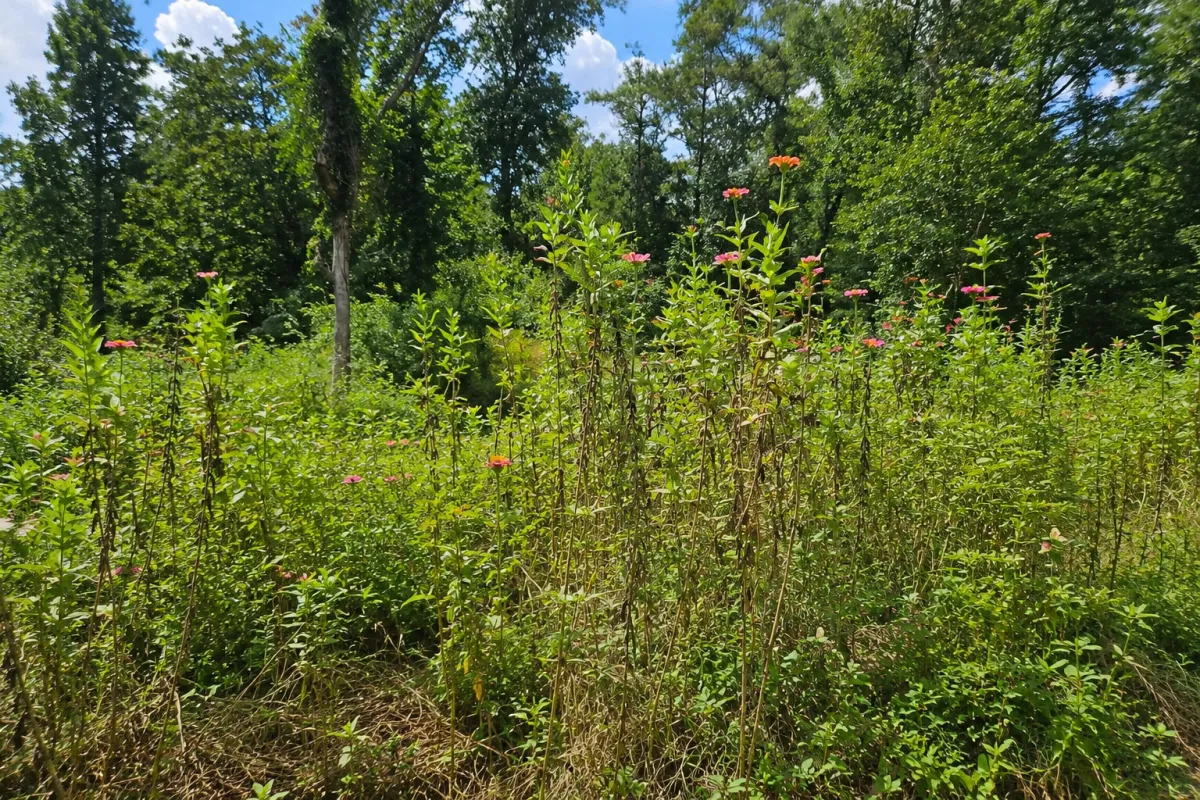
Your Summer Garden Looks Tired....
Your Summer Garden Looks Tired. That Doesn’t Mean It Failed.
By August, a garden can look pretty rough.

The flowers that were fresh and upright in May may be leaning, faded, or stretched out in every direction. Weeds seem to grow faster than anything we planted. Some vegetables have slowed down. Paths disappear. Grass creeps in.
And after months of heat, rain, bugs, mowing, watering, harvesting, and trying to keep everything alive, the gardener may look a little tired too.
It is easy to stand there and think:
Well, that didn't work.
But I think August is one of the best times to really look at a garden.
Not because it looks its best.
Because by now, it has had time to show you what worked and what did not.
We Are in That In-Between Season Too
Here at Greentown Gardens, we are in that in-between season right now.
We took a short planning break after the summer rush, and now we are getting the land ready for fall blooms.
We will be planting our fall flowers soon, but before we put anything in the ground, we are looking at what summer left behind.
Some areas held up well.
Some need work.
Some weeds got ahead of us.
Some places handled the heat better than expected.
And there are a few things we already know we want to do differently next time.
That little pause between seasons is useful.
It gives us a chance to look around before we get excited and start planting again.
Look at What Survived
One of the first things I notice in late summer is what is still standing.
What flowers kept blooming?
What vegetables stayed productive?
What plants seemed to handle the heat without needing constant attention?
Those plants are telling you something.
Maybe they fit your soil better.
Maybe they were planted in the right amount of sun.
Maybe that particular spot drains well.
Maybe they are simply tough.
At Greentown Gardens, I pay attention to how flowers react in different plots. Two areas on the same property can behave very differently.
That is something worth remembering.
Instead of only asking:
What do I want to plant next year?
Sometimes the better question is:
What already showed me that it likes growing here?
Look at What Struggled
The failures deserve some attention too.
Maybe something stayed too wet.
Maybe another bed dried out faster than expected.
Maybe plants that seemed to be in full sun in spring ended up shaded later in the season.
Maybe a section was technically plantable, but getting water to it became such a nuisance that you avoided it.
That does not always mean the plant was a bad choice.
Sometimes the location was wrong.
Sometimes the timing was wrong.
Sometimes we simply learned something.
That is why I hesitate to call everything that struggles a failure.
Gardening is full of experiments whether we mean for it to be or not.
Pay Attention to Water
August can tell you a lot about water.
Walk around after a heavy rain.
Then look again after several hot, dry days.
Which places stay damp?
Which dry first?
Where does water stand?
Where are you constantly dragging a hose?
Where are plants growing well with very little help?
Those things matter.
You may love the idea of a flower bed in one location, but if that spot requires constant watering or stays muddy for days, it may not be as convenient as it first looked.
That does not mean you cannot use it.
It just means you know more about what that spot will require from you.
The Weeds Are Part of the Story
Nobody really wants to admire their weeds in August.
But they are hard to ignore.
Where are they growing fastest?
Where are they thickest?
Which ones keep returning every time you cut them?
Which areas seem determined to grow back into brush?
I am not saying every weed needs to stay.
I am saying they can tell you something about moisture, sunlight, disturbed soil, and which parts of the property naturally grow hard and fast.
Sometimes they are simply showing you where nature has other plans.
Ask What Took Too Much Work
Late summer is also when you really know what demanded more time than expected.
What needed constant watering?
What needed repeated staking?
What required more pest control than you wanted to give it?
What grew beautifully but took so much effort that you are not sure you want to repeat it?
There is no right answer here.
Some people enjoy spending every evening working in the garden.
Others want a garden that mostly behaves itself.
The important part is knowing which kind of garden you actually want.
That can save a lot of frustration next season.
Take Pictures Before You Clean Everything Up
Before you pull everything, mow everything, and make the garden look respectable again, take pictures.
Photograph the beds.
Photograph the weeds.
Photograph the wet spots.
Photograph where plants fell over.
Photograph the places that did especially well.
Photograph the spots you wish you had handled differently.
You will forget more than you think.
By winter, it is easy to remember the pretty spring garden and forget what August really looked like.
Pictures bring it back.
They help you remember:
That bed was too dry.
That corner stayed shaded.
Those flowers handled the heat beautifully.
I never used that path.
That is useful information when planting season comes back around.
A Tired Garden Can Still Teach You Something
A perfect garden photograph can inspire you.
A tired August garden can teach you.
It shows you what survived.
It shows you what struggled.
It shows you where water moved.
It shows you where weeds took over.
It shows you what demanded too much attention.
And maybe most importantly, it reminds you that the garden you imagined in spring eventually had to meet the real summer weather, the real soil, and the real amount of time you had to give it.
That is worth paying attention to.
Before we start planting our fall flowers at Greentown Gardens, we are taking that lesson with us.
We are not trying to make every area perfect.
We are just trying to make better choices with what we learned.
If you are thinking about changing part of your property before the next planting season, our Read Your Land Before You Spend ShortCourse is available at GreentownGardens.com/Courses. We also have products available at greentowngardens.com/shop.

But even if you do nothing else, take a walk through your garden before summer is gone.
Look at what worked.
Look at what did not.
Take a few pictures.
Then give yourself permission to learn from the season instead of judging it.
A tired garden does not necessarily mean you failed.
Sometimes it simply means you have been gardening long enough to learn something.

A hungry butterfly doesn't mind the ugly plant, she sees the beauty of getting the seeds ready for next year.

At Greentown Gardens, we believe that everyone has the power to create the life they desire.

Powered by
Reighney Online Solutions
© Copyright Greentown Gardens2026. All rights reserved.