
A Garden.
A Classroom.
A new perspective.
Greentown Gardens is a real working garden and small-land learning space dedicated to stewardship through small land use and the wealth it brings us.

About Greentown Gardens
Stewardship through small land use
Greentown Gardens is a living example of stewardship through small land use.
It is part garden, part classroom, and part reminder that land does not have to be large, perfect, or professionally farmed to matter. A garden can grow more than flowers. It can grow food, beauty, habitat, income, peace, family connection, and practical skills.
Through photos, stories, short courses, wildlife observations, and real garden experiments, Louis Green helps landowners and nature-minded learners see land with fresh eyes.
Whether you have a backyard, a few acres, family land, or a dream you are still sorting through, Greentown Gardens is here to help you slow down, look closer, and think differently about what your land can do.
Greentown Gardens Blog
(EDUCATIONAL CONTENT) Is a Small Brown Skipper a Butterfly or a Moth?
Is a Small Brown Skipper a Butterfly or a Moth?
A quick garden note from Greentown Gardens
Curated by Louis Green

Sometimes the smallest garden visitors make us ask the best questions.
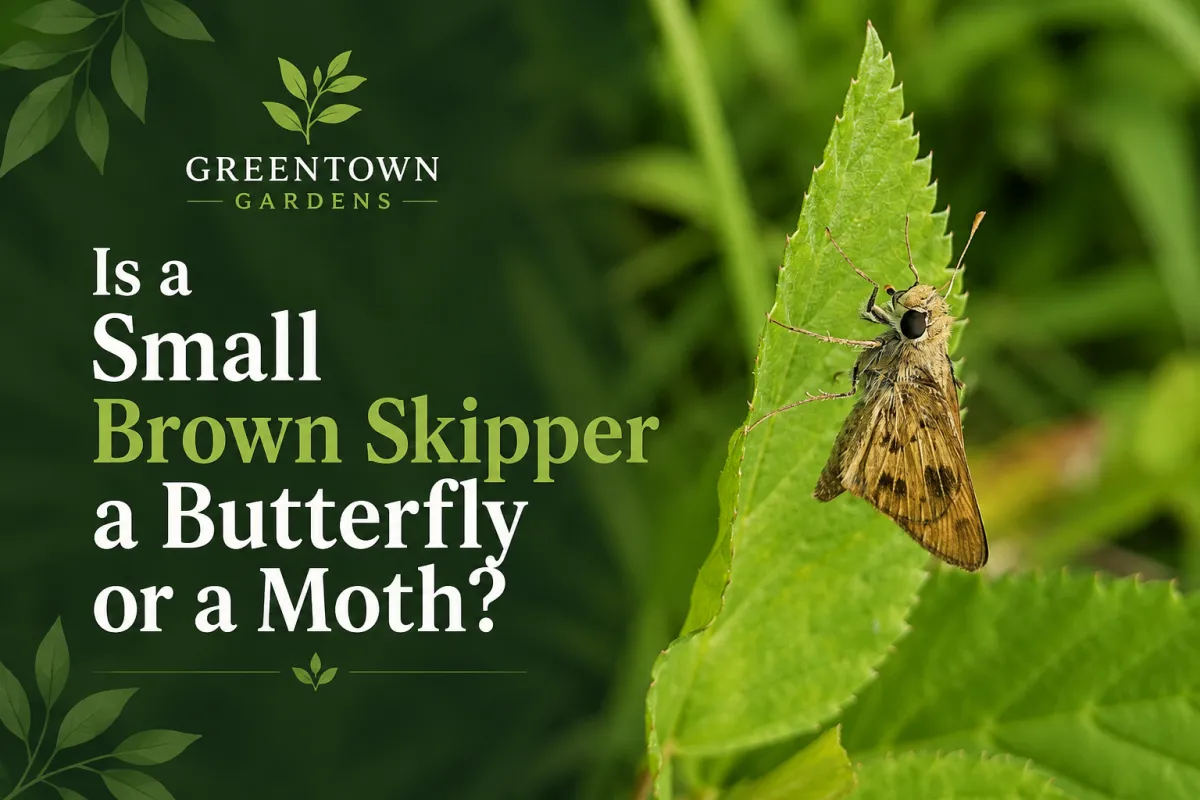
Recently, we spotted this small brown skipper resting on a green leaf at Greentown Gardens. At first glance, it is easy to wonder:
Is this a butterfly or a moth?
It has a chunky little body. It does not look as delicate as a monarch or swallowtail. Its coloring is brown and quiet instead of bright and showy. And if you have ever watched one move, you know skippers can be quick, darting, and easy to miss.
So the question makes sense.
But the answer is simple.
A small brown skipper is a butterfly.

Why Skippers Look a Little Different
Skippers are butterflies, but they do not always look like the butterflies people expect.
When many people picture a butterfly, they imagine big colorful wings, a slow floating flight, and a very delicate shape.
Skippers are different.
They are usually smaller. Their bodies often look thicker. Their wings may look more triangular. Their colors can be brown, orange, gold, or muted. And instead of floating gently through the garden, many skippers move in quick little bursts.
That fast movement is part of how they got the name “skipper.”
They almost seem to skip from place to place.
Because of that, people sometimes mistake them for moths.
So What Makes It a Butterfly?
One of the easiest clues is the antennae.
Skippers have butterfly-like antennae with little clubs at the ends, though the tips may look slightly hooked. Moths usually have different-looking antennae, often feathery or threadlike, depending on the species.
Skippers are also active during the day, visiting leaves, flowers, and garden spaces while the sun is out.
So even though they may look a little moth-like, skippers belong with the butterflies.
They are just one of the quieter, less showy members of the butterfly world.

Not Every Butterfly Looks Obvious
That is one of the things I enjoy about watching the garden closely.
Not every butterfly looks like the ones on posters.
Some are tiny.
Some are brown.
Some are fast.
Some hide in plain sight.
Some look more like a moth until you learn what you are seeing.
And that is part of the lesson.
If we only notice the big, bright, obvious wildlife, we miss a lot of what is happening in the garden.
A flower patch, a wild edge, a patch of leaves, or even an imperfect corner of the yard can be full of small life doing quiet work.
Why Small Garden Visitors Matter
A small brown skipper may not feel dramatic, but it is still part of the garden story.
These little butterflies remind us that habitat is not only about attracting the biggest or prettiest visitors. A healthy garden space can support all kinds of small creatures, including pollinators, caterpillars, spiders, bees, wasps, birds, and insects we may not recognize right away.
At Greentown Gardens, we are learning to slow down and notice more.
That means paying attention to the zinnias, the weeds, the flowers, the leaves, the edges, and the small visitors resting quietly in the green.
Sometimes the garden teaches through big moments.
Sometimes it teaches through a tiny brown skipper on a leaf.
A Simple Takeaway
The next time you see a small brown insect resting in the garden, do not rush past it.
Look closer.
It might be a moth.
It might be a butterfly.
It might be a skipper.
And either way, it may be one more sign that your garden space is being used.
Small land stewardship often begins with noticing what is already there.
At Greentown Gardens, that includes the big blooms, the wild edges, the deer in the zinnias, and the tiny butterflies that do not always look like butterflies at first.
Follow Along
If you enjoy garden notes, wildlife moments, flower photos, and small-land stewardship, you can follow Greentown Gardens here:
Louis on Facebook:
https://www.facebook.com/louis.green.92102
Karen on Facebook:
https://www.facebook.com/karen.reighney
Greentown Gardens on Pinterest:
https://www.pinterest.com/louis6226/
Thank you for visiting GreentownGardens.com.

At Greentown Gardens, we believe that everyone has the power to create the life they desire.

Powered by
Reighney Online Solutions
© Copyright Greentown Gardens2026. All rights reserved.